

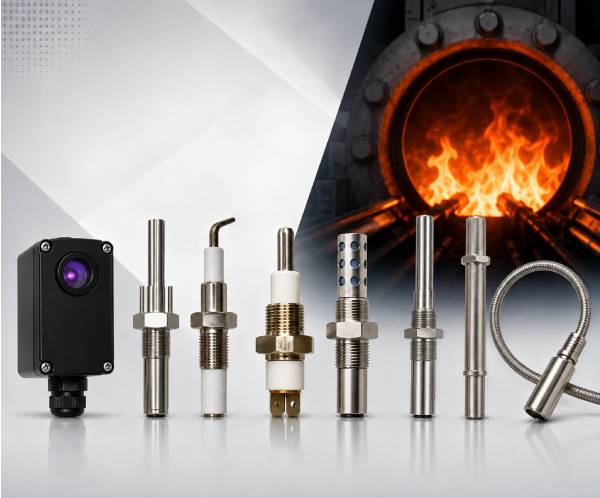
Flame sensors and detectors are among the most critical safety components in industrial combustion systems. Whether operating gas burners, oil burners, dual-fuel burners, boilers, furnaces, ovens, kilns, or dryers, accurate flame detection ensures that combustion occurs safely and efficiently. Without a reliable flame monitoring system, unburned fuel can accumulate inside combustion chambers, increasing the risk of equipment damage, production downtime and serious safety hazards. Modern flame sensors and detectors continuously monitor burner flame conditions and communicate with burner control systems to maintain stable operation. At Combustion Mart, we supply high-quality flame sensors and detectors designed to deliver dependable performance across a wide range of industrial heating applications.
What Are Flame Sensors and Detectors?
Flame sensors and detectors are safety devices used to verify the presence of a burner flame during operation. They continuously monitor combustion and send signals to the burner management system (BMS) or flame safeguard controller.
If the flame is detected, the burner continues operating normally. If the flame is lost or becomes unstable, the controller immediately shuts off the fuel supply to prevent dangerous conditions such as fuel accumulation or explosion risks.
These devices play a vital role in maintaining industrial safety while ensuring efficient combustion performance.
Why Is Flame Detection Essential?
Industrial burners operate with high temperatures and combustible fuels. Even a brief flame failure can create unsafe operating conditions.
Reliable flame monitoring helps:
- Prevent fuel leakage into combustion chambers
- Improve operator and equipment safety
- Ensure compliance with industrial safety standards
- Protect boilers and furnaces from damage
- Reduce unexpected shutdowns
- Improve combustion efficiency
- Minimize maintenance costs
- Increase system reliability
Without proper flame detection, even advanced burner systems cannot operate safely.
Types of Flame Sensors and Detectors
Different industrial burners require different flame detection technologies depending on fuel type, burner size, combustion conditions, and application.
UV Flame Sensors
Ultraviolet (UV) flame sensors detect ultraviolet radiation produced by gas and oil flames.
Applications include:
- Gas burners
- Oil burners
- Dual-fuel burners
- Industrial boilers
- Furnaces
- Incinerators
Advantages:
- Fast flame detection
- High sensitivity
- Reliable operation in industrial environments
- Suitable for high-temperature applications
Infrared (IR) Flame Detectors
Infrared flame detectors monitor infrared radiation generated during combustion.
They are commonly used in:
- Large industrial burners
- Process heating systems
- Refinery burners
- Petrochemical facilities
Benefits include:
- Excellent long-distance flame monitoring
- Stable detection
- High resistance to environmental interference
Flame Rod Sensors
Flame rod sensors use the flame rectification principle to detect burner flames.
Common applications:
- Gas-fired burners
- Commercial heating systems
- Industrial ovens
- Small and medium boilers
Advantages include:
- Cost-effective solution
- Simple installation
- Reliable performance for gas combustion
Combination UV/IR Flame Detectors
Some industrial applications require dual sensing technology.
UV/IR detectors provide:
- Improved flame discrimination
- Reduced false alarms
- Greater reliability in challenging combustion environments
- Enhanced safety for critical industrial processes
How Flame Sensors Work
The flame sensor continuously observes the burner flame during operation.
The basic process includes:
- Burner ignition begins.
- Flame sensor detects combustion.
- Signal is transmitted to the flame controller.
- The controller confirms safe combustion.
- The burner continues normal operation.
If the flame disappears:
- Sensor detects flame loss
- Controller immediately stops fuel flow
- Burner enters lockout mode
- Operator investigates the cause before restarting
This sequence prevents dangerous fuel accumulation inside the combustion chamber.
Applications of Flame Sensors and Detectors
Flame detection systems are used across numerous industries where combustion equipment operates continuously.
Common applications include:
- Steam boilers
- Hot water boilers
- Industrial furnaces
- Rotary kilns
- Textile drying systems
- Food processing plants
- Pharmaceutical manufacturing
- Chemical processing
- Metal processing
- Ceramic industries
- Asphalt plants
- Incinerators
- Thermal oxidizers
- Heat treatment furnaces
Reliable flame monitoring is essential in every industry that depends on safe combustion.
Signs Your Flame Sensor Needs Replacement
Over time, flame sensors may become contaminated or wear out due to harsh operating conditions.
Common warning signs include:
- Frequent burner lockouts
- Ignition failures
- False flame detection
- Intermittent burner shutdowns
- Slow flame response
- Error codes from the burner controller
- Visible corrosion or damage
- Carbon deposits on the sensor
Replacing worn sensors promptly helps prevent unexpected production interruptions.
Tips for Maintaining Flame Sensors
Proper maintenance improves both safety and sensor lifespan.
Recommended practices include:
- Clean sensors regularly according to manufacturer guidelines.
- Inspect wiring and electrical connections.
- Ensure correct sensor alignment.
- Replace damaged cables immediately.
- Verify sensor operation during scheduled maintenance.
- Calibrate flame detection systems when required.
- Use genuine replacement parts.
- Protect sensors from excessive dust, oil, and moisture.
Routine maintenance significantly improves burner reliability.
Choosing the Right Flame Sensor
Selecting the correct flame detector depends on several factors:
- Burner type
- Fuel type (Gas, Oil, or Dual Fuel)
- Operating temperature
- Flame characteristics
- Mounting location
- Burner control compatibility
- Industrial safety requirements
- Environmental conditions
Using the correct flame sensor ensures accurate flame detection and optimal burner performance.
Why Choose Combustion Mart?
Combustion Mart supplies premium-quality flame sensors and detectors for industrial combustion systems across multiple industries. Our products are selected for reliability, accuracy, and compatibility with a wide range of burner control systems. Whether you need a replacement flame sensor or are upgrading an entire burner safety system, we provide dependable solutions backed by technical expertise. We also offer industrial burners, burner spare parts, burner controls, ignition components, gas trains, and combustion accessories to help customers maintain safe and efficient operations.
Flame sensors and detectors are indispensable components of every industrial burner system. They provide continuous flame monitoring, protect personnel and equipment, reduce downtime, and ensure safe combustion across a wide range of industrial applications. Investing in high-quality flame detection technology helps improve operational efficiency while meeting modern safety standards. If you are looking for reliable flame sensors and detectors for your industrial burners, Combustion Mart offers trusted products and expert support to keep your combustion systems operating safely and efficiently.