

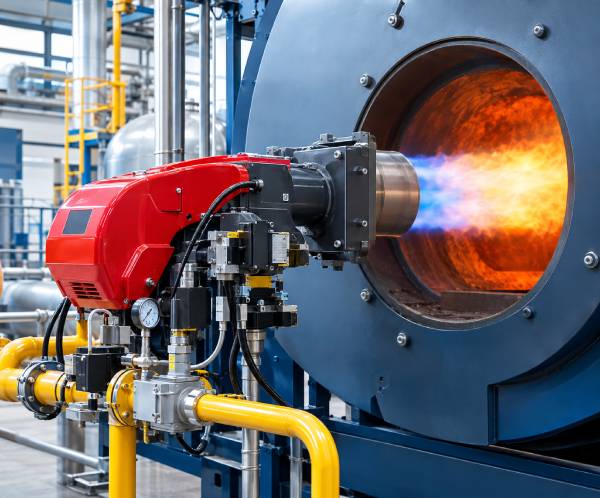
Industrial Oil and Gas Burner: Working, Benefits & Industrial Applications
An Industrial Oil and Gas Burner is a combustion system designed to generate controlled heat by efficiently burning oil, gas, or suitable gaseous and liquid fuels. These burners are widely used in industrial heating equipment where stable flame performance, reliable fuel control, and consistent heat output are important. Depending on the burner design and application, an oil and gas burner can support different fuel requirements while maintaining controlled combustion.
Industrial heating systems often require dependable combustion equipment to maintain process temperatures and operational efficiency. Properly selected burners help provide stable ignition, controlled fuel-air mixing, and efficient heat transfer across boilers, furnaces, ovens, dryers, heaters, and other thermal processing equipment.
What Is an Industrial Oil and Gas Burner?
An Industrial Oil and Gas Burner combines fuel delivery, combustion air supply, ignition, flame monitoring, and control components to produce a stable and controlled flame. Oil burners generally atomize liquid fuel before combustion, while gas burners mix gaseous fuel with combustion air in a controlled proportion.
The burner system may include components such as:
- Gas or oil fuel control valves
- Fuel pumps and regulators
- Ignition transformers and ignition electrodes
- Flame sensors and flame detectors
- Burner controllers and sequence controllers
- Air dampers and actuators
- Pressure switches
- Filters and other fuel-line components
The exact configuration depends on the burner type, fuel, heat requirement, operating pressure, and industrial application.
How Does an Industrial Oil and Gas Burner Work?
The working process begins when the burner control system receives a demand for heat. The burner sequence controller manages the operating cycle and ensures that the required safety conditions are satisfied before fuel is released.
For a typical operating sequence:
- Pre-purge: Combustion air is supplied to clear the combustion chamber.
- Ignition: The ignition system creates the required ignition source.
- Fuel supply: Oil or gas is introduced through the appropriate fuel-control components.
- Air-fuel mixing: Fuel and combustion air are mixed according to the burner operating conditions.
- Flame establishment: The mixture ignites and produces the required flame.
- Flame monitoring: A flame sensor or detector continuously monitors flame presence.
- Heat generation: The burner maintains controlled combustion to provide the required thermal output.
- Shutdown: When the heating demand is satisfied, the control system safely stops fuel supply according to the programmed sequence.
This controlled process supports reliable burner operation and helps maintain consistent industrial heating conditions.
Key Benefits of Industrial Oil and Gas Burners
An Industrial Oil and Gas Burner can provide several operational benefits when correctly selected and installed.
- Fuel Flexibility: Systems designed for oil and gas applications can provide greater flexibility where different fuel requirements need to be considered. The appropriate burner configuration depends on the equipment and application.
- Controlled Combustion: Accurate control of fuel and combustion air helps maintain a stable flame and consistent heat output. Proper combustion control can also support efficient use of fuel.
- Reliable Industrial Heating: Industrial burners are used in applications where continuous and controlled heat generation is required. Suitable burner components and regular maintenance help support dependable operation.
- Wide Range of Applications: Oil and gas burners can be used across different thermal processes, including boilers, furnaces, ovens, dryers, heaters, and other industrial heating systems.
- Integrated Safety Controls: Modern burner systems can incorporate flame monitoring, pressure switches, sequence controllers, safety valves, and other components designed to support controlled and safe combustion operation.
Applications of Industrial Oil and Gas Burners
Industrial Oil and Gas Burner systems are used in various industries where controlled thermal energy is required. Common applications include:
- Industrial boilers
- Process heating systems
- Furnaces
- Ovens
- Dryers
- Hot air generators
- Textile processing equipment
- Food processing equipment
- Chemical processing systems
- Pharmaceutical manufacturing equipment
- Metal heating applications
- Paint and coating ovens
The required burner capacity and configuration should be selected according to the application, fuel characteristics, combustion chamber requirements, and desired heat output.
Important Components of an Oil and Gas Burner
Reliable burner performance depends on the correct operation of several components. Fuel-control devices regulate the fuel supply, while ignition components establish the flame. Flame detection equipment monitors the combustion process, and burner controllers coordinate the operating sequence.
Common components include:
- Gas valves
- Oil pumps
- Solenoid valves
- Pressure regulators
- Pressure switches
- Burner sequence controllers
- Ignition transformers
- Ignition cables
- Flame sensors
- Actuators
- Air dampers
- Safety shut-off valves
- Fuel filters
Using suitable replacement components is important when maintaining or servicing industrial burner systems.
Selecting the Right Industrial Oil and Gas Burner
The appropriate burner should be selected according to the specific requirements of the heating system. Important considerations include fuel type, burner capacity, combustion chamber dimensions, operating pressure, temperature requirements, control method, and application conditions.
It is also important to consider the availability of compatible spare parts and service components. Proper sizing and component selection can help support stable combustion and reliable operation throughout the burner’s service life.
Maintenance of Industrial Oil and Gas Burners
Regular inspection and maintenance help identify worn or damaged components before they affect burner performance. Fuel valves, filters, ignition components, flame detectors, pressure switches, and control devices should be checked according to the equipment manufacturer’s recommendations.
Proper maintenance can help support:
- Stable flame performance
- Reliable ignition
- Consistent fuel supply
- Accurate flame monitoring
- Reduced unexpected downtime
- Reliable heating operation
Maintenance procedures should always follow the applicable burner manufacturer’s instructions and safety requirements.
An Industrial Oil and Gas Burner provides controlled combustion for a wide range of industrial heating applications. By combining fuel-control components, combustion air management, ignition systems, flame monitoring, and burner controls, these systems can deliver consistent and dependable heat for boilers, furnaces, ovens, dryers, and other industrial equipment.
Choosing the correct burner configuration and maintaining compatible components are important for reliable combustion performance and long-term operation.
Get Industrial Oil and Gas Burner Solutions from Combustion Mart
Combustion Mart provides industrial combustion products, burner components, and spare parts for various heating and combustion applications. Explore suitable Industrial Oil and Gas Burner solutions and related burner components for your industrial requirements.